Speed, design and trust each influence how a website is experienced in different ways. None of them is a standalone formula for success, but together they shape how easy the site is to use and evaluate.
Speed, design and trust: what makes a website work on the Costa Blanca
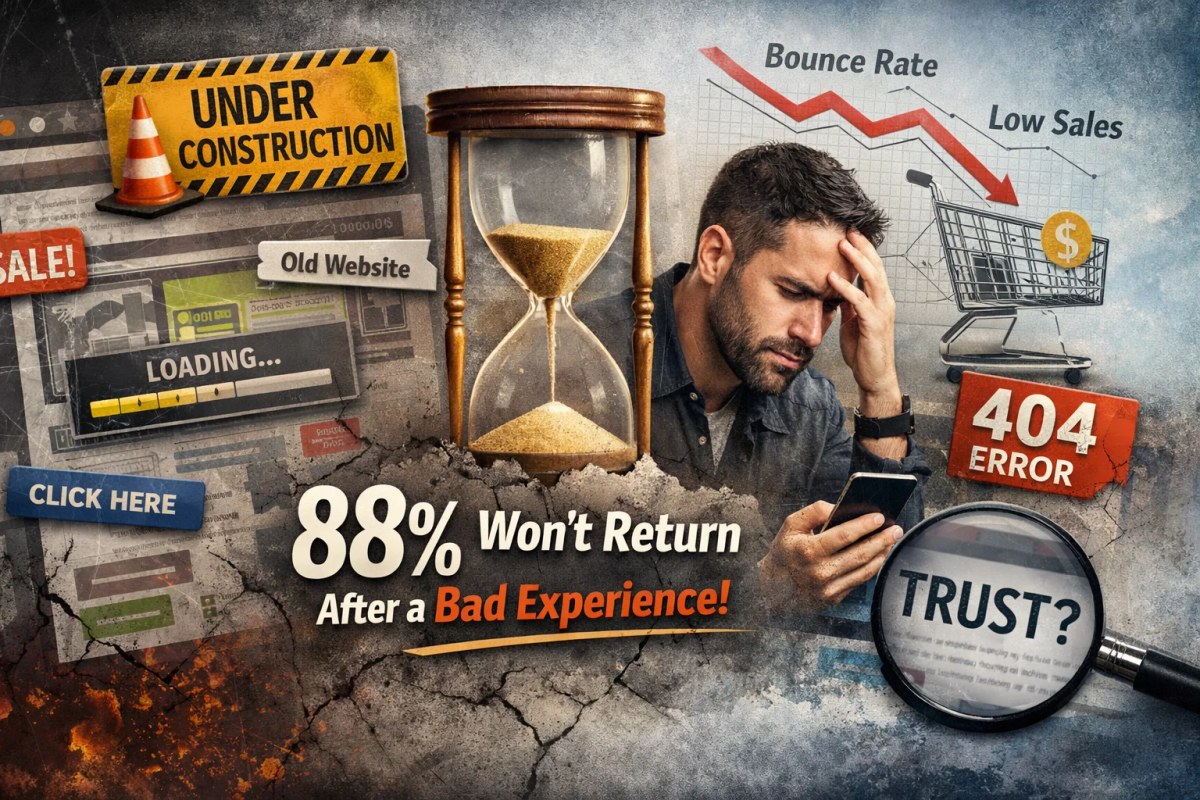
Think about the last time you clicked a link and the page took too long to load. You didn't wait. You clicked back and tried the next result.
Your potential clients do exactly the same thing. Every day. On your website.
Speed, design and trust all contribute to first impressions. Research shows that visual judgements can form very quickly, but a laboratory finding does not mean every visitor makes a final decision about your business in exactly 50 milliseconds.50 milliseconds. Before they read anything. Before they understand what the business does.
That's the window.
Speed: the thing visitors notice first
A slow page doesn't just frustrate visitors. It signals something is wrong before they've seen anything else.
Slow sites can have many causes: large images, scripts, server response time, external embeds, inefficient code or plugins. You cannot infer speed from cheap hosting or a particular number of WordPress plugins. Measure the finished pages on mobile and desktop.
Google factors page speed into rankings. Performance and Core Web Vitals can contribute to page experience, but a slow site does not automatically rank below every faster competitor. Speed matters primarily because visitors expect a responsive, stable experience.
The fix depends on the cause: optimise images, reduce scripts, improve caching, change hosting or make code more efficient. Next.js can be extremely fast, and so can a well-built WordPress site. Implementation matters more than the platform label.
Design: the thing visitors react to without realising
Once the page loads, design takes over.
Good design is not only about appearance. It helps visitors understand the business, find information and recognise a logical next step. There is no fixed three-second rule; clarity and hierarchy should fit the content and audience.
Poor design can create friction through cluttered layouts, hard-to-read text, unclear actions or imagery that overwhelms the content. A call to action does not always need to sit above the fold; what matters is that visitors find it when a next step makes sense.
For international Costa Blanca clients, a professional and organised site can help reduce uncertainty when they do not yet know the business. How much design influences trust varies by sector, service and visitor.
Trust: the thing that makes them actually contact you
Speed makes a site easier to use. Design helps people understand information. Trust signals can reduce doubt. Which one matters most varies by visitor and situation.
Trust signals are specific things: client testimonials, Google reviews, a recognisable photo of you or your team, a clear address and phone number, case studies showing real results. Each one reduces the risk a visitor feels about reaching out to a business they don't know.
Many international Costa Blanca clients research online before making contact or travelling. Clear business information, reviews, case studies and recognisable people behind the business can therefore be especially useful, without assuming they matter more here than in every other market.
A site with little verifiable information or no recognisable people behind it can create more doubt. The right trust signals depend on the sector; not every business needs testimonials, a physical address or the same type of evidence.
Why all 3 have to work together
A fast site can still be unclear. A beautiful site can still lack trust. A credible site can still be technically frustrating. That is why performance, usability and credibility are best assessed together rather than treating one factor as the explanation for everything.
The three can reinforce each other, but none is a guarantee of conversion by itself.
If you want to know how your site currently performs on all 3, send me your URL on WhatsApp and I'll give you a direct assessment.
Read more: