A website isn't a box to tick. It's the thing that builds trust before you've spoken to anyone, answers questions at 2am, and gets you found on Google. Here's what a website actually does for your business on the Costa Blanca.
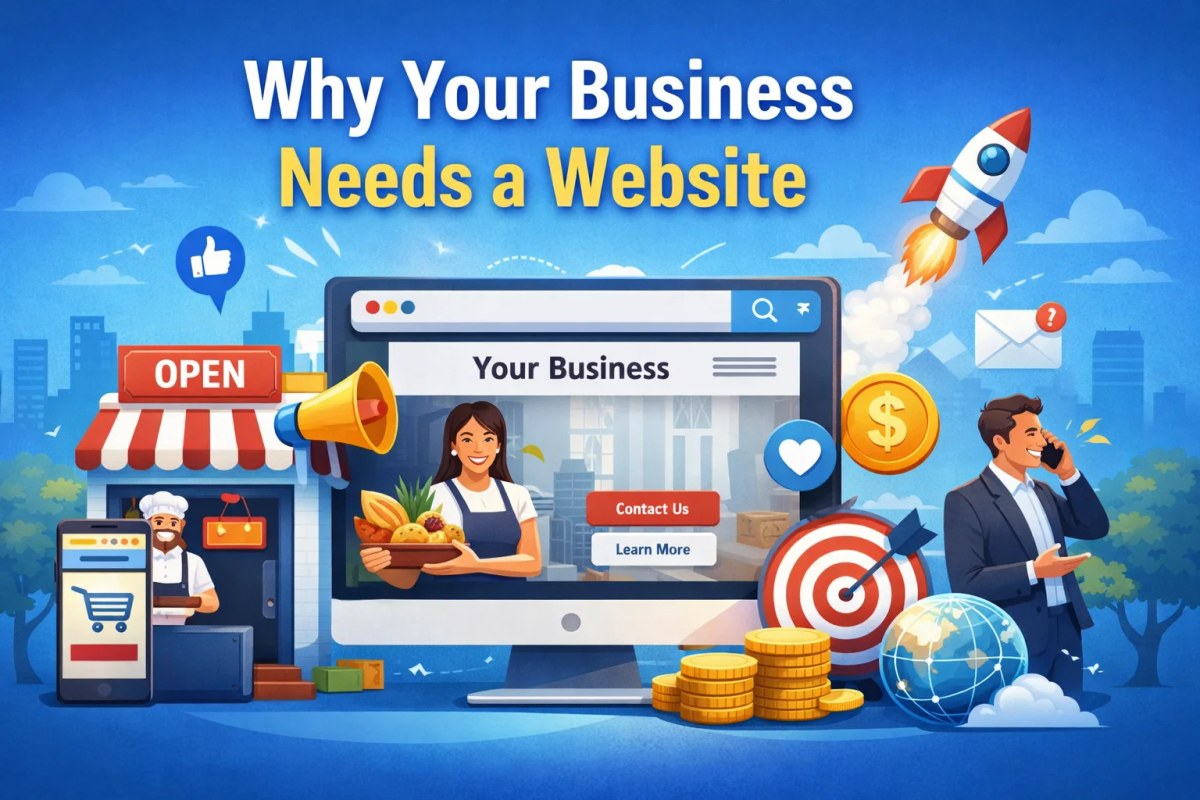
Why your business needs a website
There's a version of this conversation I have regularly. A business owner on the Costa Blanca, good at what they do, known locally, getting referrals. And somewhere in the conversation they mention they don't really have a website, or have one that hasn't been touched in 4 years.
The business is fine. But it's working harder than it needs to.
Here's what a website actually does, when it's built properly.
It builds trust before anyone contacts you
Potential clients often look online for more information before making contact. That may be through Google, your website, reviews, social media or recommendations. A website gives you one stable place where you control what people can find about your business.
If they don't find a website, or find one that looks abandoned, that's a signal. Not necessarily a dealbreaker, but a signal that things might not be as professional as expected.
A good website can answer questions that would otherwise come up later in a conversation: what exactly you do, where you work, how your process works and how to contact you. That can make an enquiry easier without assuming every visitor is already 'half convinced'.
It works when you're not
A good website is your most patient employee. It doesn't take days off, doesn't go on holiday in August, and doesn't miss calls because it's on another job.
Outside office hours, people can still review your services, process and contact options. That does not mean every late-night visitor becomes a lead by morning, but the information remains available whenever a potential client searches for it.
Google can find you
Many customers use search engines while researching, alongside recommendations, social media and other channels. A website gives you more room to be visible for specific services and local searches than a social profile alone.
Getting found in those results is easier with your own crawlable pages, strong content and a sound SEO foundation. Facebook and Instagram profiles can also appear in search results, but they offer less control over structure, local landing pages and content.
On the Costa Blanca specifically, different audiences search in different languages. For a business around La Nucia, Alfaz del Pi, Altea or Benidorm, Dutch, English, Spanish or another language may matter depending on the actual customer base. A multilingual website gives you more room for dedicated, indexable content in each relevant language.
It's your platform, not someone else's
Facebook and Instagram control their own algorithms, features and visibility. That makes social media useful but less controllable than an owned website.
With your own domain and website, you have more control over content, structure and portability. You still depend on domain registration, hosting and technical maintenance.
That's the core problem with running your business entirely on social media: a large part of your presence depends on the platform's rules and structure.
What a good website actually costs
A professional website does not have to start as a large custom project. My current Starter Website package starts at €895. The Business Website package currently costs €1,395. The right option depends on pages, functionality, languages, content management and support. Additional languages are available on request; the pricing page contains the current details.
A website can repay its investment by supporting enquiries and revenue, but that is not guaranteed and depends on the offer, traffic, conversion and customer value. Treat it as a business asset whose results should be measured.
If you want an honest look at what a website would cost for your specific situation, send me a message on WhatsApp and I'll give you a straight answer.
Read more: