
A scalable website is designed so that growth does not create a collection of disconnected fixes. The foundation is a clear content structure, reusable components and a frontend that loads only what each page actually needs.
Scalability starts with architecture
Pages, services, case studies, reviews, FAQs and other recurring elements should not be redesigned every time. They use a defined structure in which content can change without rebuilding the technical foundation.
This keeps typography, spacing, responsive behaviour and interaction consistent across the site. It also reduces technical debt as the website grows.
Reusable components provide control
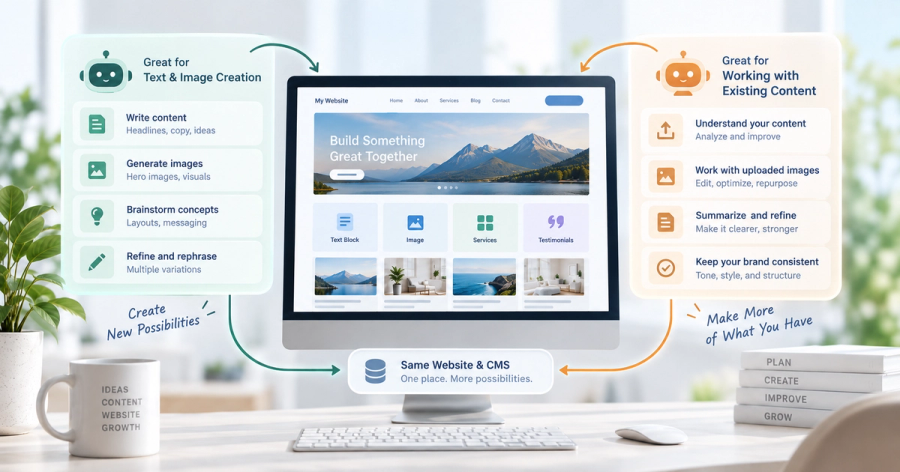
A component contains more than visual styling. Responsive behaviour, accessibility and technical settings can be defined inside it as well. The implementation stays consistent while the content can vary between pages.
Custom work remains possible where it has a functional purpose. The website can therefore expand without turning every new requirement into an exception.
Structured content keeps management predictable
Sanity stores content in explicit fields and document types. Titles, introductions, services, metadata, images, categories and relationships can be managed independently. This makes content more reusable and easier to validate than a free-form page layout.
For multilingual websites, the same structure can be completed per language while missing translations, metadata and internal references remain visible.
Growth does not have to reduce performance
More pages do not automatically make a website slower. The implementation determines how much JavaScript, CSS, media and other assets are loaded on each page. A modern frontend can pre-render large parts of the site and deliver optimised media.
Performance becomes part of the architecture instead of a repair phase after the site has already become heavy.
The same structure supports SEO and AI search
Clear document types, meaningful internal relationships and specific pages make information easier for search engines and AI systems to interpret. A new service or location page only adds value when it has its own purpose and search intent.
For local visibility, the same principles apply as in my article about local SEO on the Costa Blanca: relevant content, clear local signals and a technical foundation that can be indexed properly.
Why this also matters for AI-assisted management
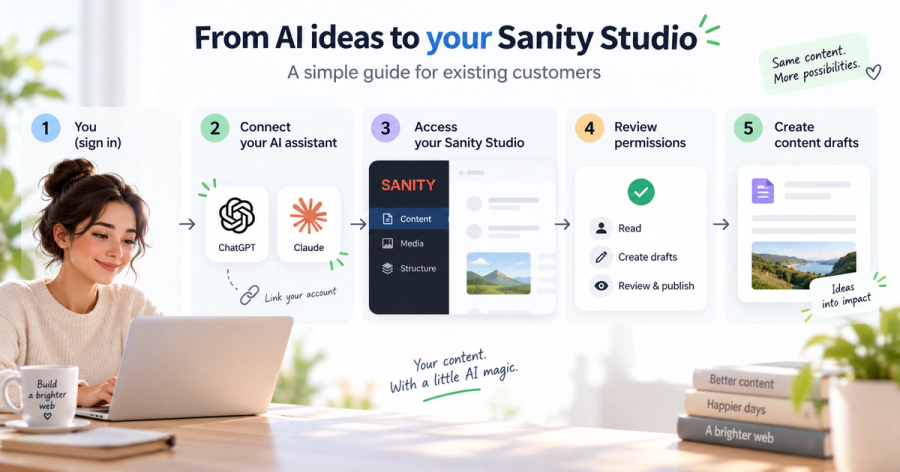
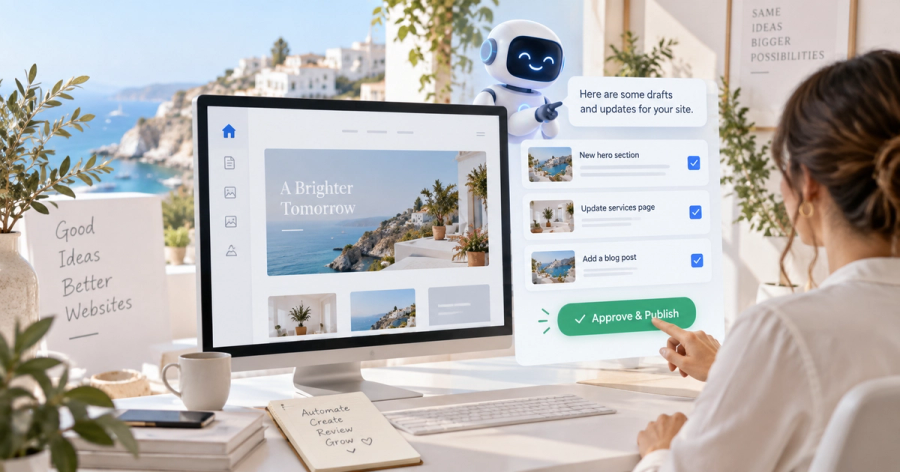
An AI assistant can work more precisely when the CMS has explicit fields and document types. Content can then be created as a draft, reviewed, translated or updated without the assistant having to infer the structure of the page.
In AI in website management I explain which content tasks fit this workflow and where human review remains necessary.
The standard for a future-ready website
A sound architecture balances three things: speed for visitors, independent content management and room to expand functionality and content without rebuilding the technical foundation each time.
More about my approach is available on web design for Costa Blanca businesses.
Local visibility can grow with the website
For businesses in La Nucia, Alfaz del Pi, Altea and Benidorm, scalability also means local content can be expanded when it is genuinely useful. New services, projects and relevant pages can add clear service and location context without creating thin copies for every town. That supports both local SEO and visibility in AI search because search engines and AI systems can better understand where the business operates and what expertise it offers there.