Many restaurants on the Costa Blanca run on platforms: bookings through TheFork, reviews on TripAdvisor, atmosphere on Instagram and delivery through Glovo, Just Eat or Uber Eats. That works, but all of those platforms belong to someone else. Your own website is the place you do own, and where all those channels can point to.
So it is not about choosing between platforms and a website. It is about having a foundation of your own that you control.
What do platforms do well?
Platforms have reach. TheFork brings guests who do not yet know where they want to eat. TripAdvisor is a standard step in many tourists' decisions. Instagram shows atmosphere in a way no website can. So do not stop using them: use them for what they are good at.
What are the downsides of relying on platforms alone?
You pay for guests who already knew you
Reservation platforms often charge a fee per booking or per guest, depending on your plan and the channel the guest books through. Delivery platforms keep a percentage of every order. Even a regular guest who types in your name and books through the platform can then cost you money.
You have less control over contact with your guests
The platform decides how and when you reach your guests. A new seasonal menu, a wine evening or reopening after winter is easier to announce through your own channels.
The rules can change
Fees, visibility and terms are set by the platform. A change to Instagram's algorithm or a new pricing structure can affect your business immediately, without you having any say.
You sit right next to your competitors
On a platform you appear in the same format as other restaurants, often with suggestions for the place around the corner next to you. On your own website, guests only see your story, your style and your menu.
What does your own restaurant website do better?
Your website is the central place where all your information is correct: menu, prices, opening hours, allergens, events and contact, in your guests' languages. Google uses your website alongside your Business Profile, and AI assistants such as ChatGPT read it to answer questions about your restaurant.
You also decide how guests book: through your own reservation system's widget, a call button or WhatsApp. Guests who already know your name come straight to you.
Isn't Instagram enough?
Instagram is strong on atmosphere but weak on practical questions. A menu in a highlight or opening hours in your bio are hard to find, and not everyone has an account. Use Instagram to attract attention and your website to make the decision easy. Also read do I need a website if I already have Instagram or Facebook?
How do you combine platforms and your own website?
- Add the link to your own website to your Google Business Profile, Instagram bio and your TripAdvisor and TheFork profiles.
- Place your reservation system's booking widget on your own website, so guests book there directly.
- Put your website on your menu, bill and business cards, with a QR code if you like.
- Keep your menu and opening hours up to date in one place, your website, and link to it from other channels.
- Ask for a Google review on your website, because those help you most in Google Maps.
How your website and Business Profile strengthen your visibility together is explained in getting your restaurant found in Google Maps and ChatGPT.
How much does your own restaurant website cost?
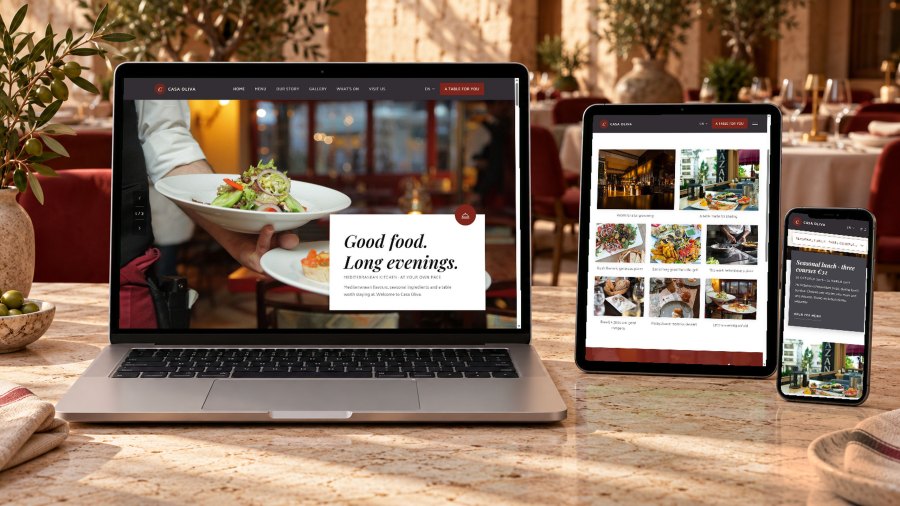
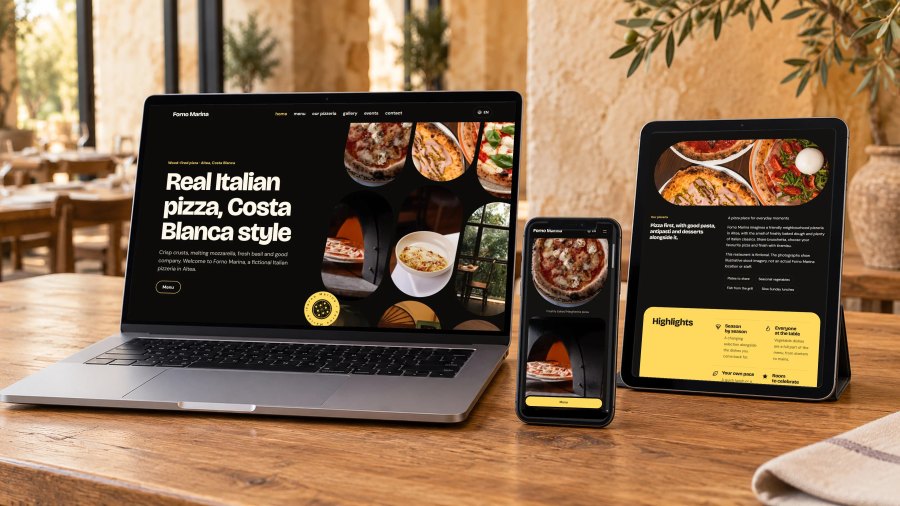
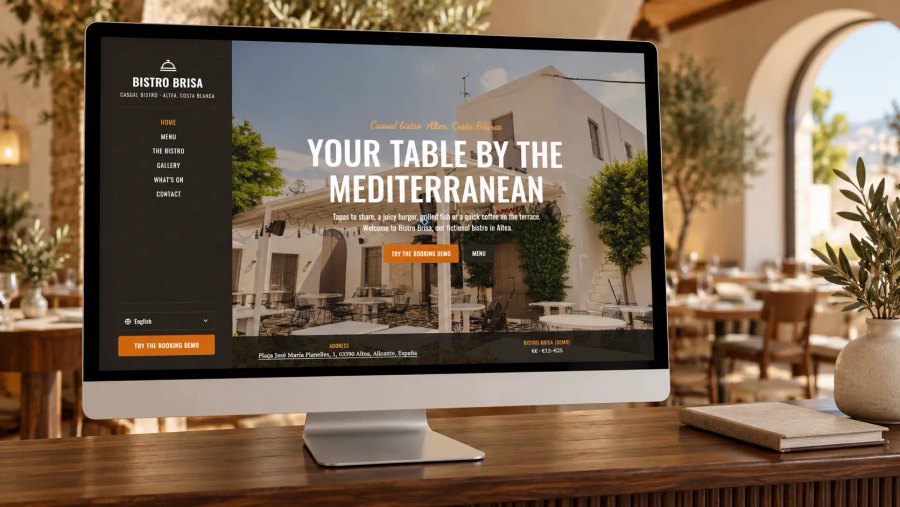
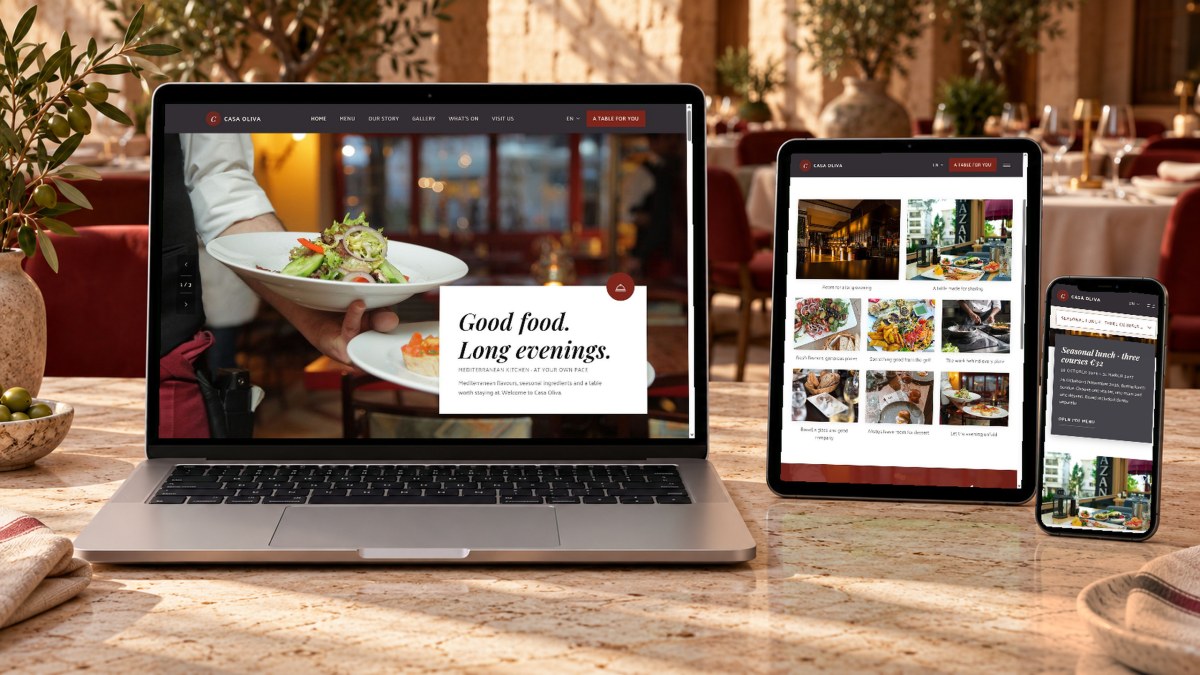
Less than many owners expect. A Costa Wave Web restaurant website costs a one-off €325 excluding VAT, including the CMS, three languages and your own brand colours. For a limited time, the first year of hosting and technical maintenance is free; after that you pay €300 per year. Choose, for example, the elegant Mediterranean style of Casa Oliva and add your own booking widget.
Do the maths yourself: what do you pay in a busy month in fees for bookings or orders that could have come in directly?
Frequently asked questions
Should I stop using TheFork if I have my own website?
No. TheFork and similar platforms bring new guests. Your own website makes sure guests who already know you, or search for you specifically, come straight to you. They complement each other.
Can I use my existing reservation system on my website?
Yes, if your reservation system offers a booking widget. My restaurant templates include a field for it as standard, at no extra cost.
How quickly can a restaurant website go live?
If you add the content yourself, your website is ready within 2–3 working days. If I add the content, it takes 5–7 working days. What exactly should be on it is covered in the checklist for a good restaurant website.