Why automatic translations can harm your SEO Strategy
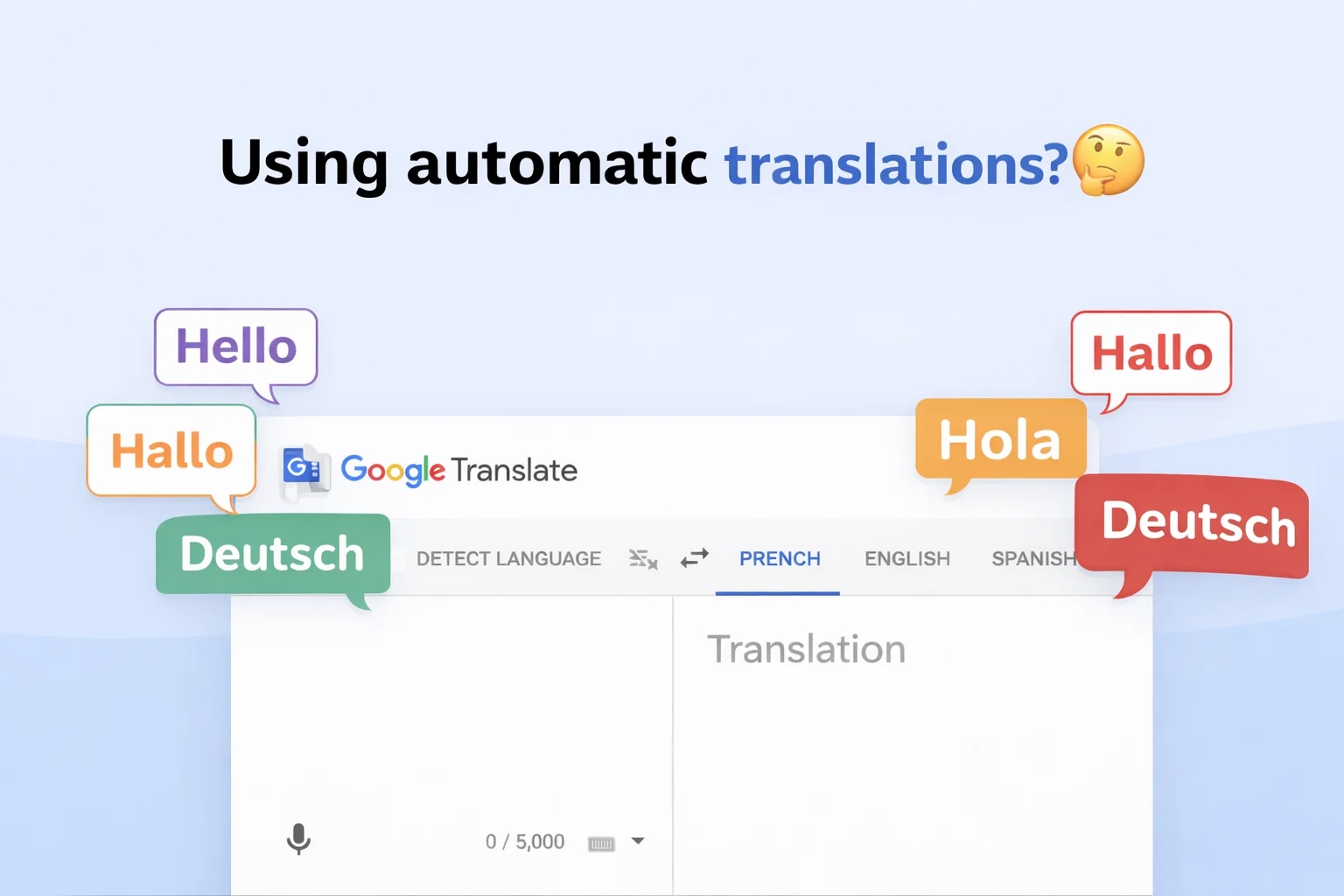

Automatic translations are often used as a shortcut for multilingual websites. One click, and your website suddenly exists in three or four languages. It looks efficient on paper. In reality, it is one of the most damaging choices I regularly see on websites in Spain, especially in real estate and service-based businesses.
The issue is not multilingual content itself. The issue is how it is implemented.
Google distinguishes translation from automation
Google does not penalise translated content by default. What it does distrust is content that is automatically generated and published without human review.
Texts copied directly from Google Translate or AI tools fall into this category. The result is usually not a hard penalty, but something more subtle:
- pages struggle to rank
- language versions compete with each other
- Google ignores parts of the site
- the wrong language appears in search results
In short: the site exists in multiple languages, but Google does not fully trust it.
Literal translations do not match search behaviour
SEO is not about words. It is about intent.
People search differently in every language. Automatic translations ignore:
- local terminology
- commonly used phrases
- regional preferences
- cultural context
For example, “holiday homes” in English should not be translated word-for-word into Dutch. Dutch users search for “vakantiewoningen”, not a literal equivalent. A machine cannot detect that difference. Google can.
This mismatch leads to pages that technically exist, but never attract the right traffic.
Poor translations damage credibility
Beyond SEO, there is a trust issue.
Automatically translated text is immediately recognisable. The tone feels off, sentences sound unnatural, terminology is inconsistent. Visitors may not consciously analyse it, but they do notice it.
And that affects behaviour:
- less trust
- fewer enquiries
- higher bounce rates
- lower conversions
Language is not decoration. It is part of how people decide whether they feel comfortable reaching out.
Automatic translation widgets make the problem worse
Besides automatically translated content, many websites use a Google Translate widget or similar language switcher. It looks convenient, but from an SEO perspective it is one of the worst choices you can make.
A translation widget only translates the site in the visitor’s browser. No real language pages are created.
For Google this means:
- the website exists in only one language
- translated text is not indexed
- there are no separate URLs per language
- SEO titles and descriptions per language are impossible
- the site cannot rank in other languages
To visitors the website appears multilingual. To search engines it is not.
On top of that, translation widgets almost always produce literal, unnatural translations. This damages readability and reinforces the exact problem discussed in this blog: lower trust, higher bounce rates and weaker conversions.
In short: translation widgets solve nothing for SEO and make automatic translations even more harmful.
Why this matters even more on the Costa Blanca
Many businesses here target multiple nationalities at once. English, Dutch, Spanish, sometimes German or French. That often leads to the assumption that one translated message fits all.
It does not.
Each language represents a different audience, with different expectations and decision-making processes. Treating them as one “international” group weakens your website instead of strengthening it.
Multilingual SEO requires structure, not shortcuts
Well-performing multilingual websites are built with intention:
- separate content per language
- unique SEO titles and descriptions
- clear URL structures
- correct hreflang implementation
- language-specific tone and wording
In my own work with Sanity CMS, I set this up deliberately. Each language has its own SEO fields and content logic. That allows optimisation per language, rather than copying one message everywhere.
This is not advanced SEO. It is foundational.
What actually works
Automatic translation can be a starting point, but never the final version.
What does work:
- human review for every language
- SEO metadata written per language
- manual optimisation of key pages
- accepting that multilingual quality requires effort
The payoff is significant. Sites that do this properly perform better in search, feel more trustworthy and convert more consistently.
Conclusion
Automatic translations promise efficiency but deliver compromise. They weaken SEO, reduce trust and prevent your website from performing at the level it should.
Multilingual websites require care, structure and language awareness. When done properly, they become an asset instead of a liability.